
Wildland firefighters have to prepare for the wildland fire season, but how do they do it?
All firefighters are required to take the RT-130 class annually. Bobby Esplin, a certified wildland firefighter class instructor, said, “Every year in the class, we do several things. We do a year-in-review that goes through any accidents, deaths, or close calls. We have a fire behavior section, a seasonal outlook, and have to do a practice shelter deployment and watch the safety video.”
Firefighter Tre Schaaf said,“A couple of months prior, I started focusing on getting into better physical shape. I work up to hiking about three miles in 45 minutes, four to five times a week with a 45-pound pack on my back.”
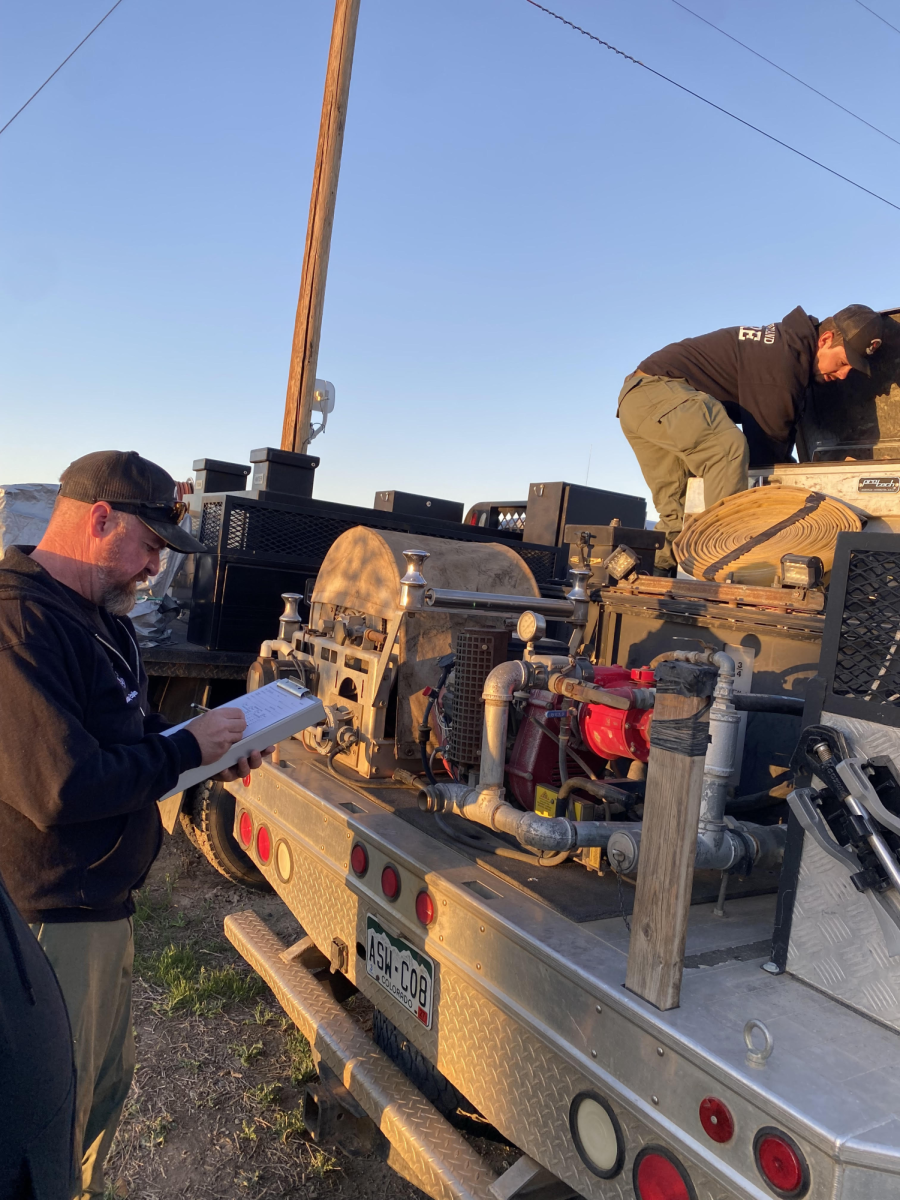
Firefighter Albertino De Los Santos said, “I double-check my gear from the previous season and make changes based on experience. I stay hydrated with liquid IV and am always expelling kinetic energy somehow. Honestly, I try to eat meals I wouldn’t get to have while on fire. Mentally, I make sure I check in with my squad from time to time to verify nobody’s crashin’ out.” So it is not all physical, and there is quite a lot of mental preparation wildland firefighters have to do as well.
For wildland firefighters to go on 14 to 21-day hitches, they need training, knowledge, and preparation. The training is key on the fire line.
Tiffany Thomson, another firefighter, said, “Training is the only reason you make it off the fire line when everything else goes bad. Fire doesn’t care how tough you are; training is what keeps you alive.”
Along with their yearly RT130 class, wildland firefighters must also take a physical test to ensure they’re ready for the upcoming season. This test requires them to walk 3 miles while carrying 45 pounds in 45 minutes or less.
Firefighter Franny Esplin said, “The pack test doesn’t seem like it would be that hard, but you definitely need to be in shape and ready for it. This job can be physically demanding, so you always need to be prepared for whatever might be thrown your way.”
All of this training, both physical and mental, shows how demanding the job is.
Firefighter Dustin Brickey said, “Follow your passions and dreams. Fire is not for all, but for the ones it’s for, it becomes an addiction, a way of life.”
Wildland firefighting takes dedication, hard work, and a strong mindset, but for those who choose it, it becomes something they truly love and commit to.
“Train like your life depends on it, because it does,” said Esplin